Small business · 5–50 people

Compliance without a compliance team.

The EU AI Act does not care that you are a 12-person agency or a 30-person SaaS. Veritome gives you the same engine the enterprises use, with an onboarding that fits an afternoon — not a quarter-long programme.

No card · EU-hosted · 5 minutes to a first classification
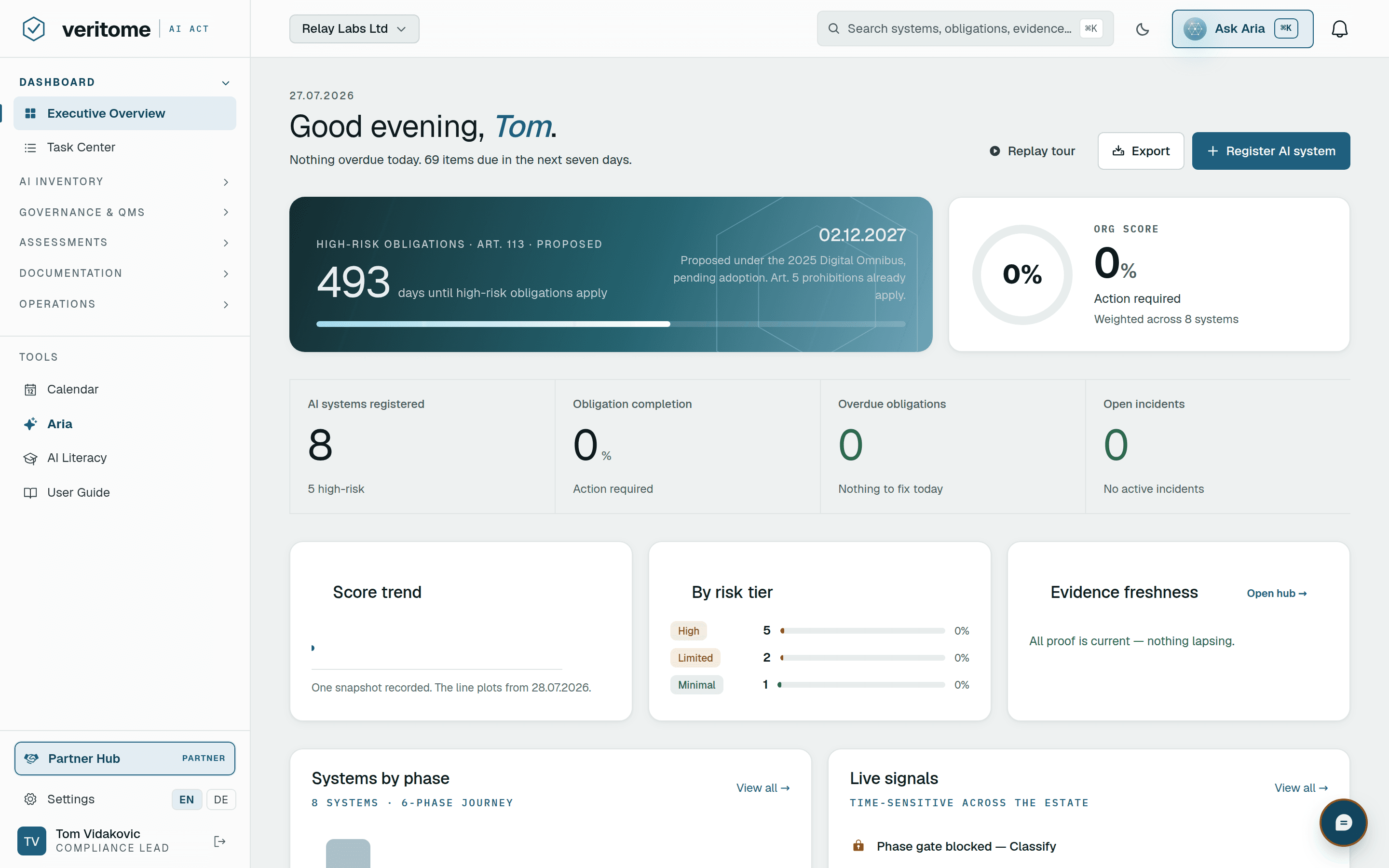
Veritome dashboard — obligation completion across the estate, the next step in every programme and the action queue
The reality

Three things small teams tell us first.

What we hear

We use eight AI tools and I genuinely don't know which ones the Act applies to.

What the product does

Most teams default to 'all of them' or 'none of them'. The classification puts a yes/no answer next to each system in under ten minutes, with the article behind it.

What we hear

Our lawyer's quote was twenty thousand euro just to map our obligations.

What the product does

The engine maps obligations from your classification. Lawyer time goes on the things that need legal judgement, not on a glossary exercise.

What we hear

An auditor showed up and we had no documentation, just folder names.

What the product does

Every form files evidence at item level. Annex IV, FRIA and the Declaration of Conformity assemble themselves; nothing lives in a Drive folder anyone can rename.

What you get

Built for teams that do not have a compliance officer.

01

Onboarding in an afternoon

Add your AI systems, run the classification, accept the mapped obligations. No rollout programme, no consultancy.

02

No legal background needed

Every screen explains the obligation in plain English beside the article reference. Legal judgement only where it matters.

03

Pay only for what you use

Classification of one system is free. Plans follow your role under the Act. No twelve-month minimum, no implementation fee.

04

Prepared for the auditor, at your pace

Classification and obligation mapping in the first weeks, then the evidence base built item by item — starting with what an auditor asks for first.

05

Vendor AI covered

Most SMEs are deployers, not providers. The deployer journey — IFU receipt, oversight plan, worker notification — is the simpler one and the default.

06

AI literacy that ticks Art. 4

Six role-based programmes, a record of completion per person, an organisation-level view. Evidence for the Art. 4 duty without buying a separate LMS.

In practice

Three companies, three starting points.

Use case 01

A 25-person marketing agency using generative tools on client work.

  • Each tool added to the system register in under two minutes.
  • Classification: most land in limited risk — the Art. 50 transparency duties.
  • The engine flags the disclosure notice; the smart form drafts the text.
  • Done — no Annex IV, no FRIA, no high-risk burden.
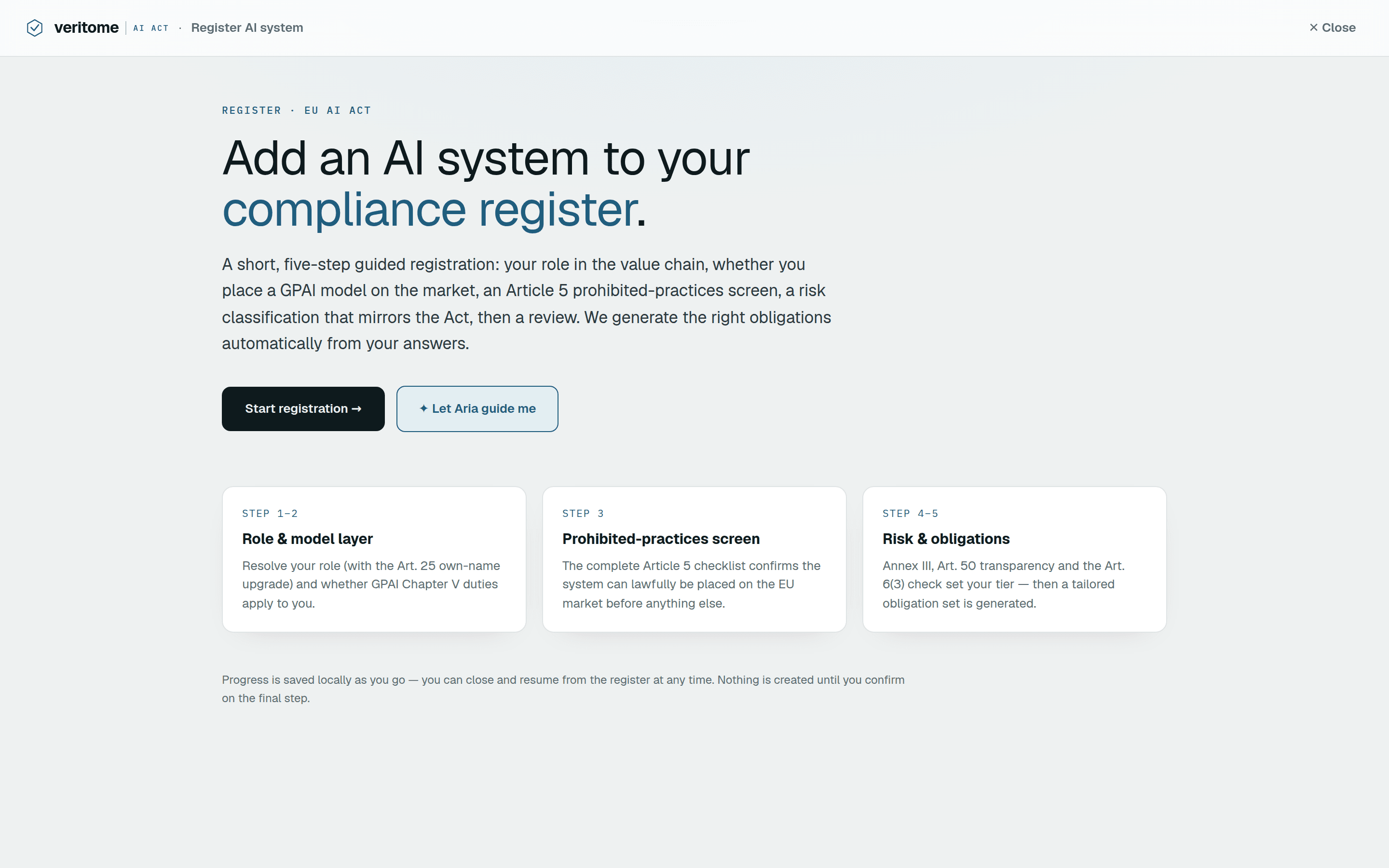
Veritome guided classification — the register wizard that walks Article 5, Annex I, Annex III and the Article 6(3) exception
Use case 02

A 40-person e-commerce SME with a recommendation engine that ranks suppliers.

  • Supplier ranking returns limited risk; the customer-facing scoring model is flagged for a closer look under Annex III.
  • The engine materialises the provider obligations across the phases.
  • The QMS shape is scaffolded from existing policies; the sign-off ledger is started.
  • Annex IV assembles from the smart forms; the Declaration of Conformity is drawn up in the editor.
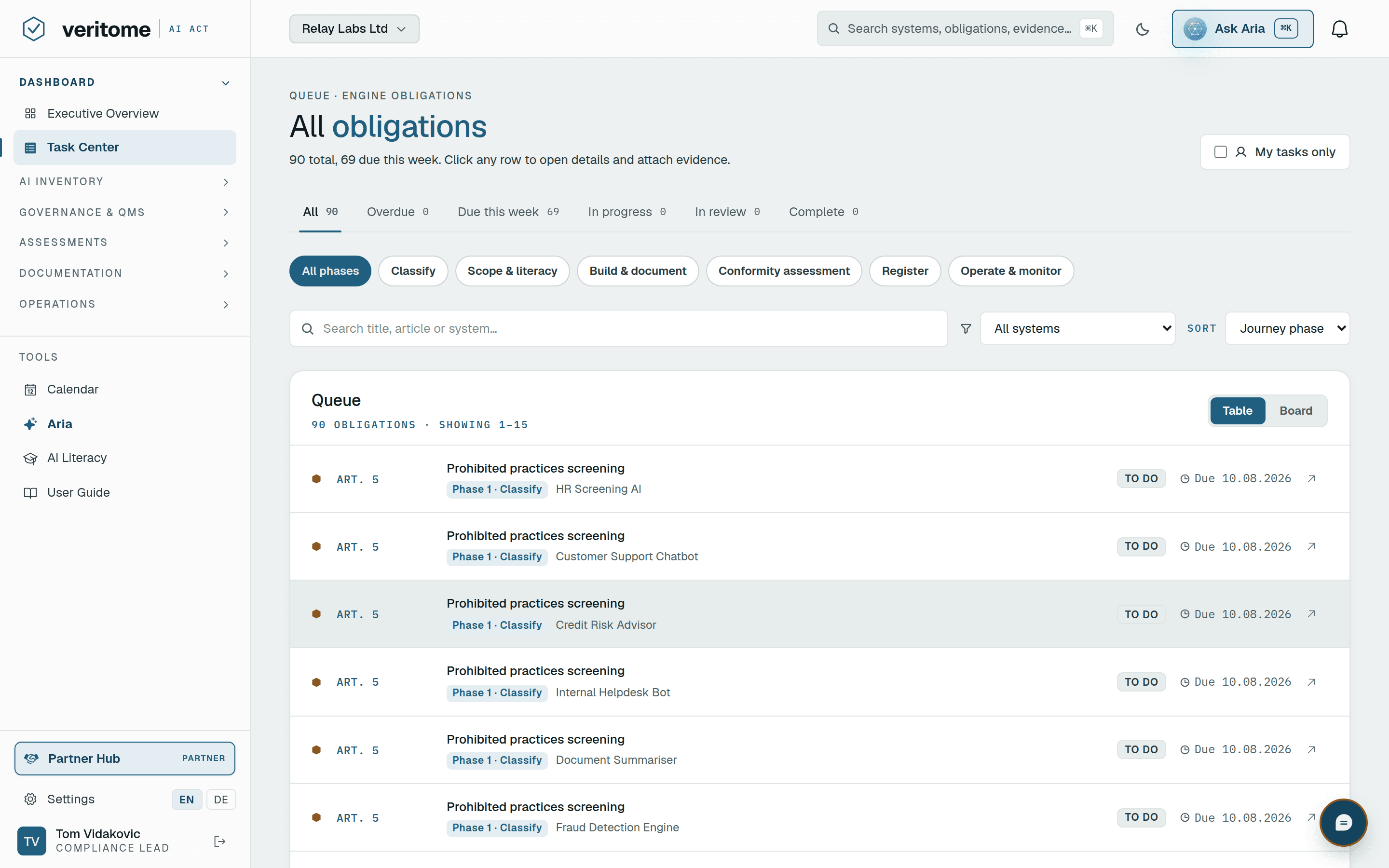
Veritome obligations register — engine-derived duties with owners, dates and status
Use case 03

A 12-person professional-services firm receiving a high-risk provider's IFU package.

  • The provider sends an Art. 13 sharing token by email.
  • The compliance lead pastes the token; the package imports in seconds.
  • Deployer obligations populate — oversight plan, monitoring schedule, worker notification.
  • The hash chain links the deployer's record back to the provider's seal.
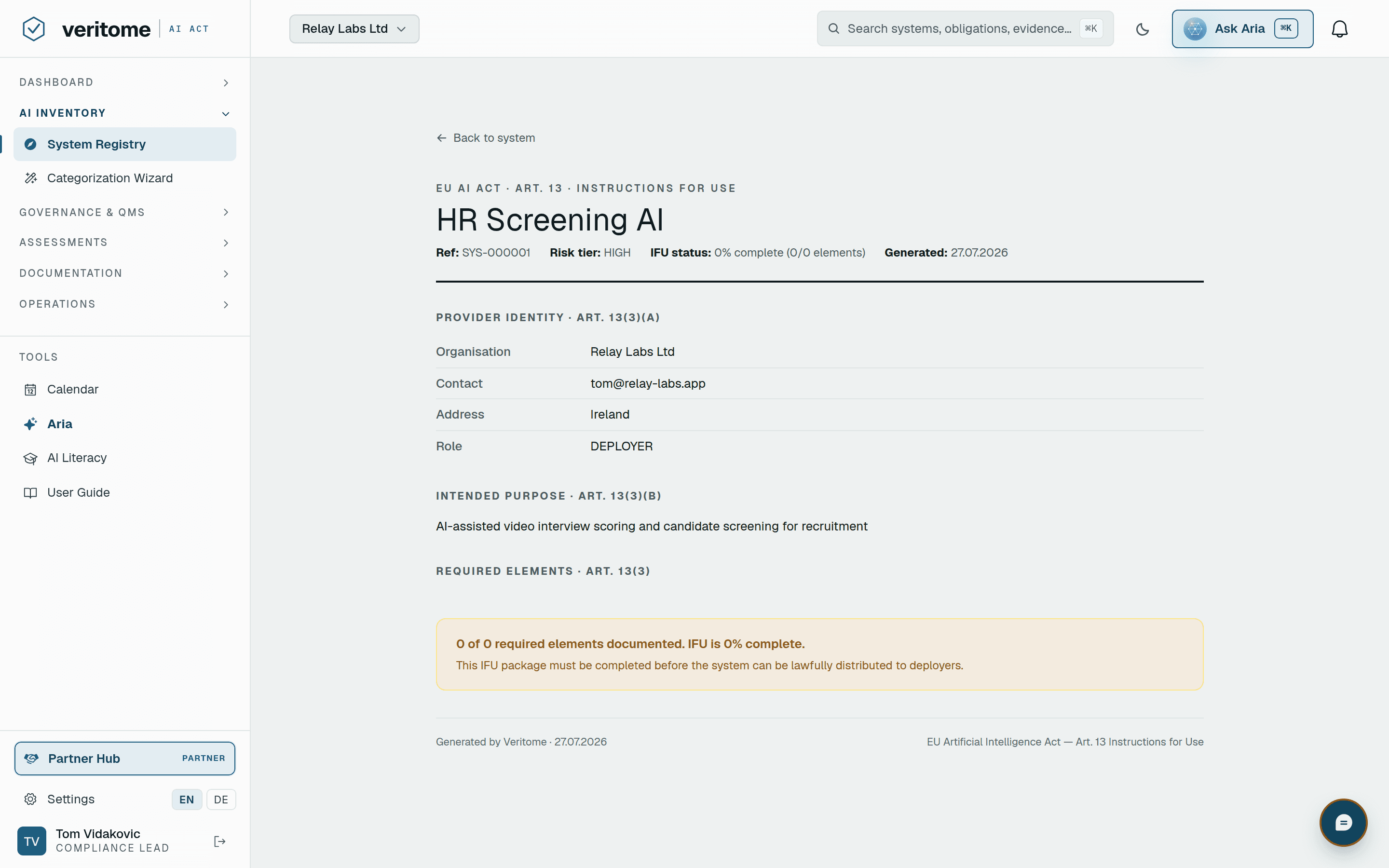
Veritome Article 13 instructions-for-use package — provider identity, intended purpose and the required elements for provider-to-deployer handoff
What you will lean on

The capabilities small teams use most.

Straight answers

Questions small businesses ask

Does the EU AI Act apply to a small company that only uses AI tools?

Usually yes, as a deployer. Using a chatbot, a generative tool or a vendor's scoring model puts you under the deployer duties — Article 4 AI literacy for everyone, Article 50 transparency where people interact with the AI, and Article 26 where a system is high-risk. Most SME systems turn out limited or minimal risk, and the free check says which.

Do I need a lawyer to use Veritome?

No. The engine maps obligations from your classification and every screen names the article it rests on. You spend lawyer time on the judgement calls that genuinely need one, not on a glossary exercise — and Veritome is not legal advice.

Does GDPR come into it?

Where personal data flows, yes. Five data questions in the intake decide which GDPR duties join the same register — Art. 6, Art. 9, Art. 22, Art. 28, Art. 35 and the transfer rules — so the EU AI Act and data-protection work is one list, not two.

What does it cost?

Classification of one system is free, without a card. Paid plans follow the role the Act gives you — deployer or provider — and are published in full on the pricing page.