What the supply-chain roles miss.
A pre-market check that leaves a record.
Where the checks actually bite.
A reseller importing a US vendor's high-risk system.
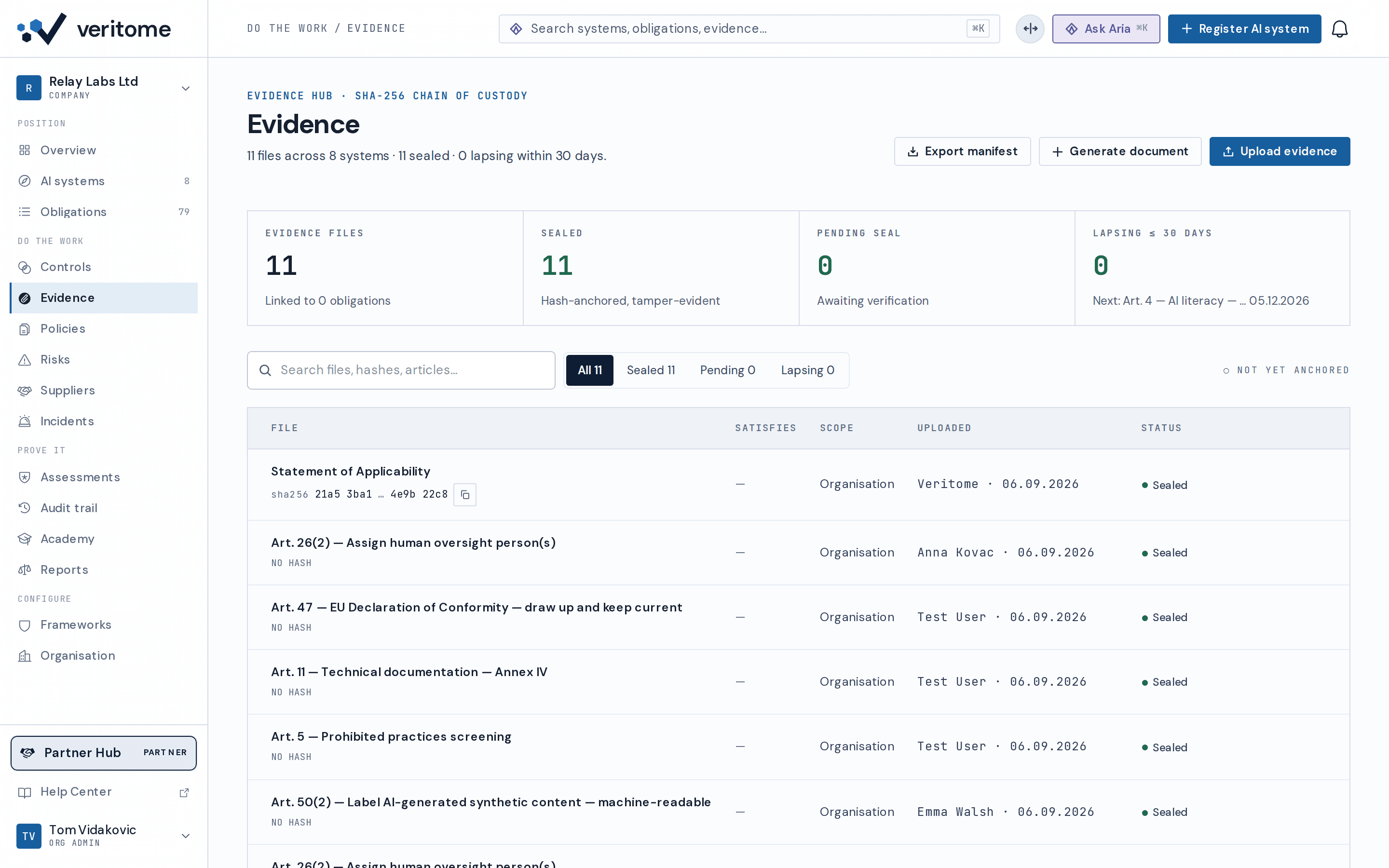
- Art. 23 checks recorded before placing — assessment, documentation, CE, declaration.
- The authorised representative in the Union is named, not assumed.
- Declaration and instructions retained against the Art. 23(5) ten-year clock.
- No Annex IV: the technical file remains the provider's obligation.
A distributor putting its own brand on a bought model.
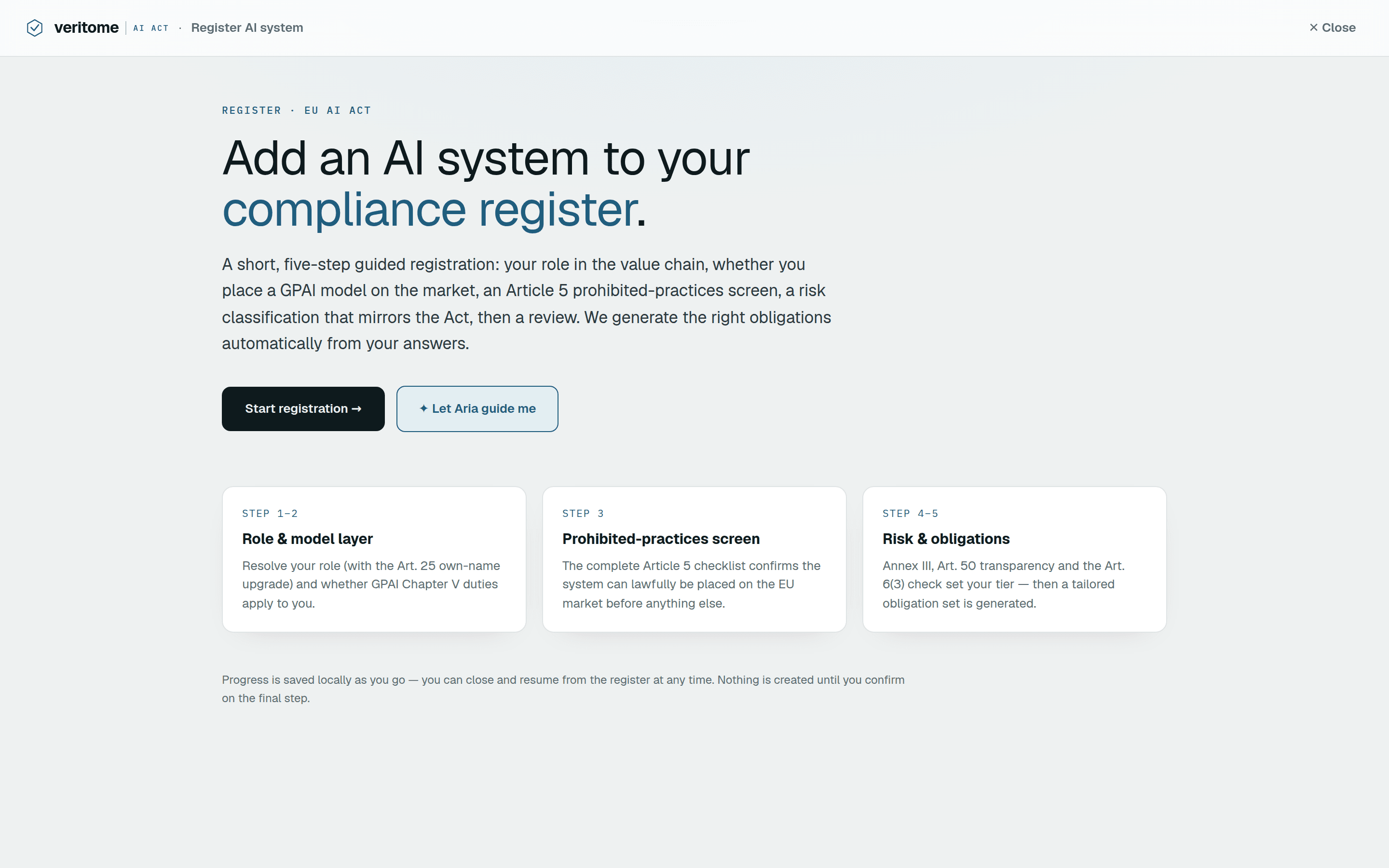
- The branding question in the intake flips the role to provider under Art. 25(1)(a).
- The obligation set changes on the spot — risk management, Annex IV, conformity, CE.
- The vendor's file becomes an input to theirs, not a replacement for it.
- Recognised at classification rather than at audit.
A reseller who believes a shipped system no longer conforms.
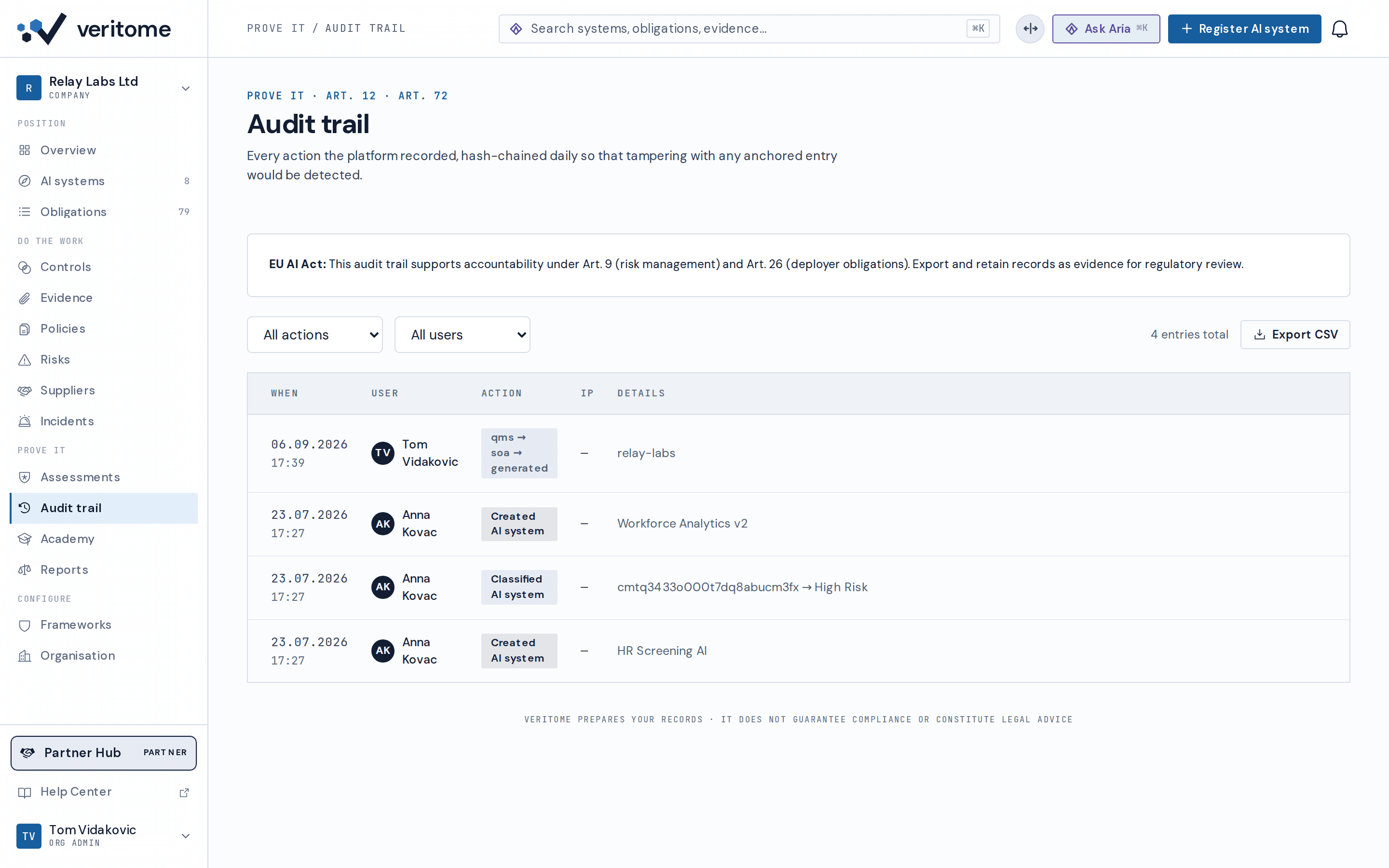
- The decision not to make it available is recorded with its reasoning and date.
- The provider and the relevant authority are informed, and that is evidenced.
- Storage and transport conditions are captured while the system is their responsibility.
- The trail is hash-chained, so the sequence of what was known when holds up.
The parts the supply chain reaches for.
Straight answers for the supply chain.
What is the difference between an importer and a distributor?
An importer places on the EU market an AI system bearing the name or trademark of a provider established outside the Union (Art. 3(6)). A distributor is anyone else in the supply chain who makes a system available on the market, other than the provider or the importer (Art. 3(7)). The importer is the first point of entry into the Union; the distributor is a later link in the same chain.
What must an importer verify before placing a high-risk system?
Article 23 requires you to check that the provider has carried out the conformity assessment, drawn up the technical documentation, affixed the CE marking, provided the EU declaration of conformity and the instructions for use, and appointed an authorised representative where required. If you have reason to believe the system does not conform, you must not place it on the market until it does.
How long must an importer keep the paperwork?
Article 23(5) requires the importer to keep a copy of the certificate issued by the notified body where applicable, the instructions for use and the EU declaration of conformity for ten years after the system was placed on the market. Ten years is longer than most document-retention defaults, which is why it is worth recording deliberately rather than assuming the vendor folder survives.
When does a distributor become a provider?
Article 25(1) — if you put your name or trademark on a high-risk system already on the market, substantially modify it, or change its intended purpose so that it becomes high-risk. At that point the provider set applies to you and the original provider's obligations for that system fall away. Rebranding is the most common route, and it is rarely recognised as a compliance event at the time.
Do we have duties after the system is sold?
Yes. Both roles must ensure that storage and transport conditions do not jeopardise conformity while the system is their responsibility, must act where they consider a system non-conforming, and must cooperate with authorities and give them the information needed to demonstrate conformity.